Customers
A hidden tax
Marked up menus mean you are charged more for the same food, without ever being told why.
Why DING exists
Food delivery in South Africa had quietly become a business where the platform won and almost everybody else paid for it. DING was built to split the value instead of extracting it.
The problem
A platform charges a restaurant commission on every order. When it is big enough, the kitchen either absorbs it or lifts its menu prices inside the app. Most lift. Which is why the burger costs more on your phone than it does at the counter.
Marked up menus mean you are charged more for the same food, without ever being told why.

High platform commissions leave a kitchen with less money on every single order.
When prices rise and order volumes fall, the people doing the delivering get fewer trips.
Our model
Shared prosperity is not a slogan for us, it is the constraint we design around. If a decision makes DING money by taking it from a customer, a restaurant or a rider, it is the wrong decision.

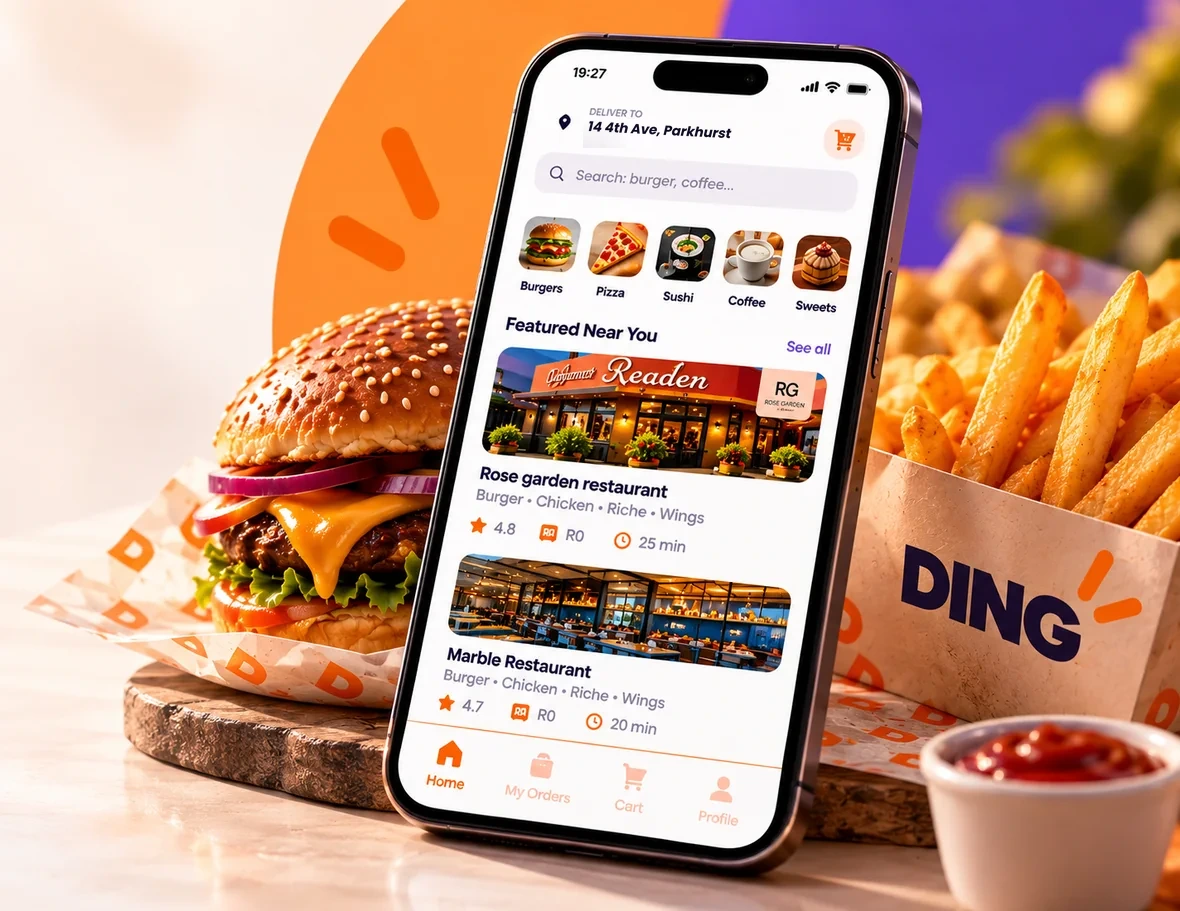
No marked up menus. The food price in DING is the price on the board in the shop, plus a flat R19.99 delivery. What you save is real money, not a promotion that expires.
Lower commissions mean a kitchen keeps its margin instead of pricing delivery customers away. A full kitchen beats a high commission on an empty one.
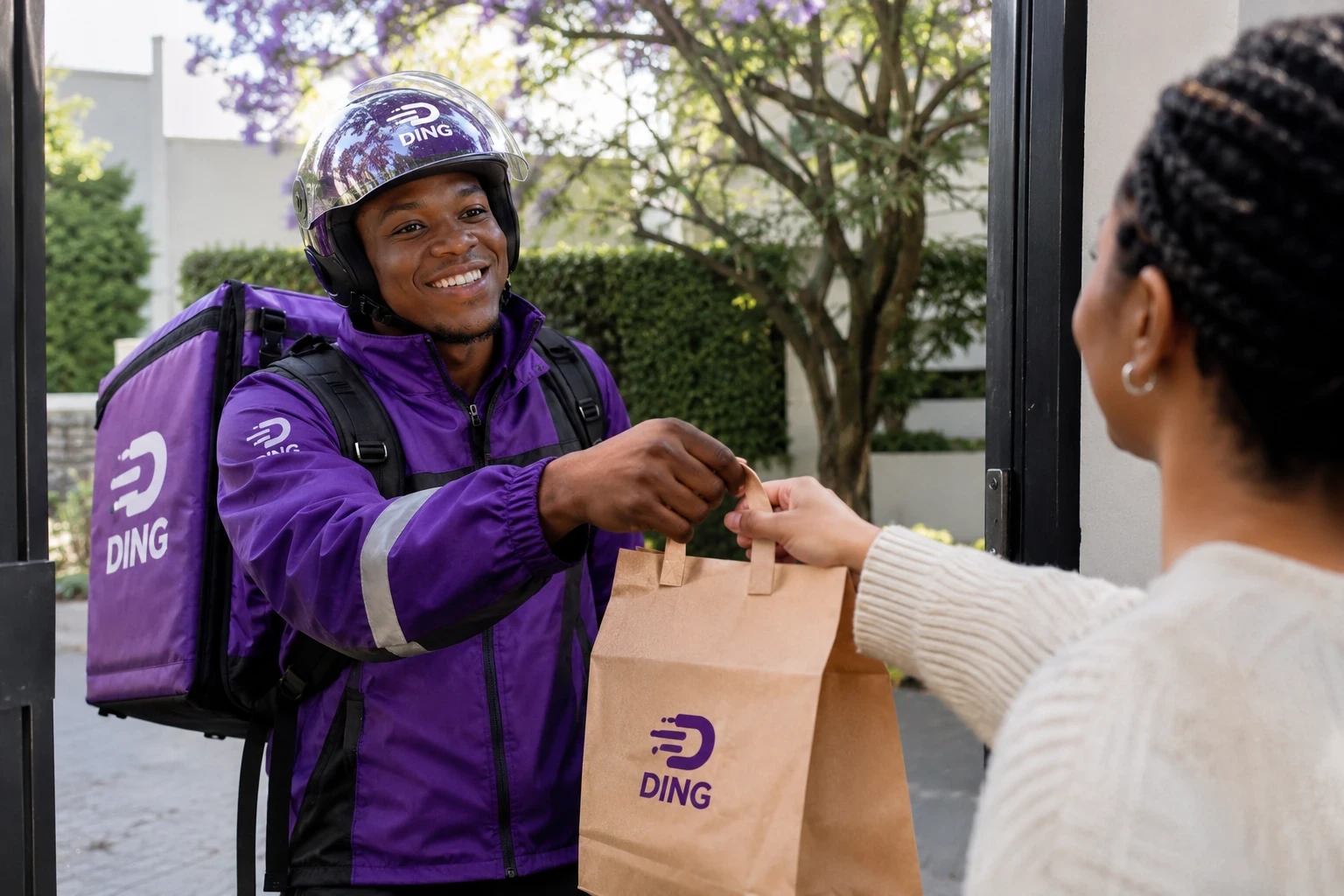
The R19.99 delivery fee goes to the driver in full. DING takes none of it. Cheaper food means more orders, which means more earnings for the people on the road.
When the platform wins and everyone else pays for it, that is not a marketplace. It is a toll gate.

Proudly local
We believe South Africa deserves technology platforms that create opportunities for the businesses, customers and communities they serve, rather than treating them as a margin to be harvested.
Where we are going
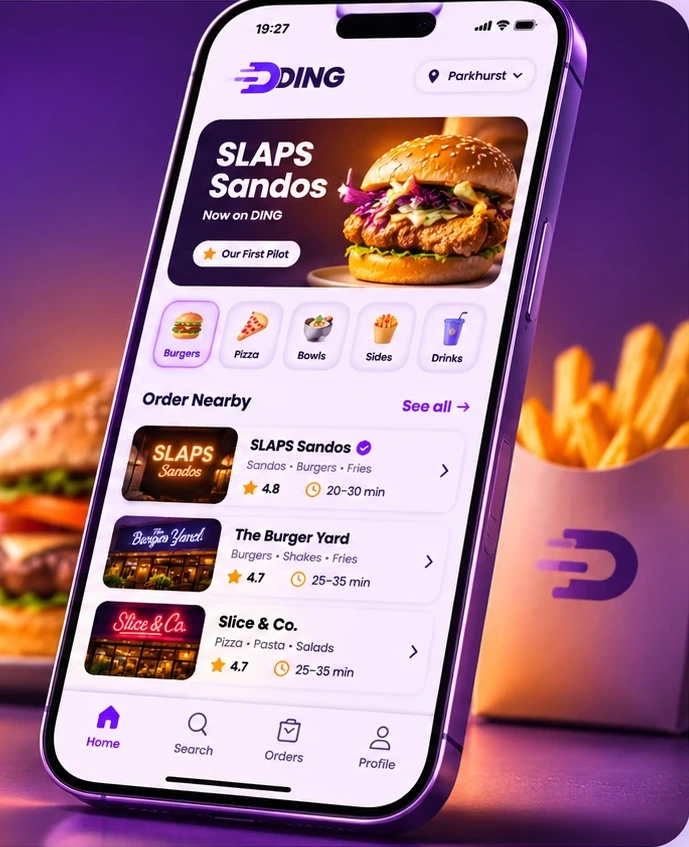
We are deliberately starting small. DING is live in Parkhurst with SLAPS Sandos, and that has to work properly: warm food, honest prices, a restaurant that is better off, before we pick the next neighbourhood.